
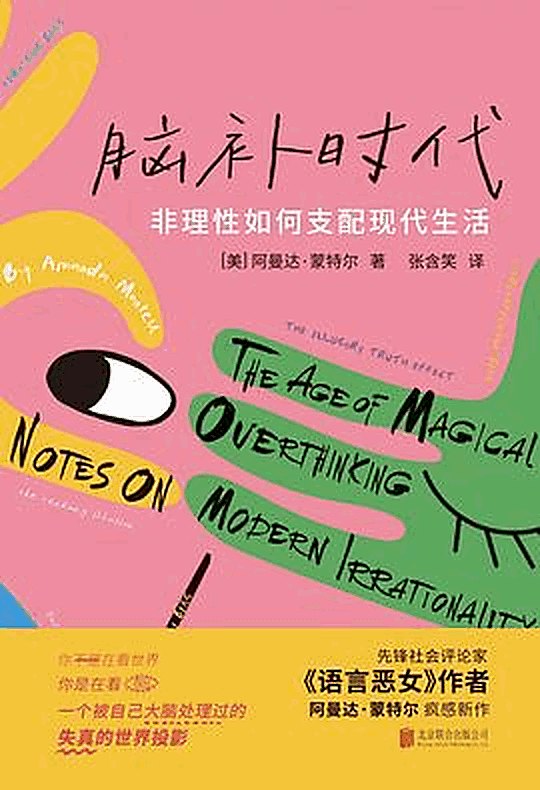
读书笔记这一栏的第一篇,从一本闲书开始:《脑补时代:非理性如何支配现代生活》([美] 阿曼达·蒙特尔 著,张含笑 译)。书里讲的是我们这个时代各种各样的「想太多」——信息越多、选择越多,脑子反而越不安生。
读完顺手写了一篇英文随感,把书里戳中我的部分理了理。放上来,也算给学生们存一篇议论文的架子:现象—原因—对策—收束,四段走完,不绕弯。
My Understanding of the Age of Overthinking
Nowadays, more and more people agree that we are living in 「the age of overthinking」. In modern society, people easily fall into endless self-doubt and mental exhaustion, even when they face small and simple things. From my perspective, this widespread overthinking is a typical product of our fast-developing digital era.
The first and biggest cause is information overload. With smartphones and social media, we are exposed to huge amounts of news, opinions and perfect lifestyles every day. People tend to compare their real life with others' polished online images. They start doubting their own choices, appearance and future, which creates unnecessary anxiety. A short message, a delayed reply or a casual comment can all become reasons for endless guessing.
In addition, modern life provides us with countless choices. Unlike people in the past who had limited life paths, we now face numerous options in study, work and relationships. However, more choices do not always bring freedom. Instead, they bring greater fear of failure and regret. To avoid mistakes, many people repeatedly analyze every possible result, turning simple decisions into heavy mental burdens.
Nevertheless, overthinking solves nothing. True thinking helps us solve problems, while overthinking only drains our energy and traps us in the past and future. To escape this cycle, we need to set clear boundaries for our minds. We should focus on real-life actions rather than imaginary worries and learn to accept imperfection.
In conclusion, the age of overthinking reflects the pressure and confusion of modern life. Only by stopping useless rumination and living more in the present can we regain peace of mind and live a lighter and more effective life.